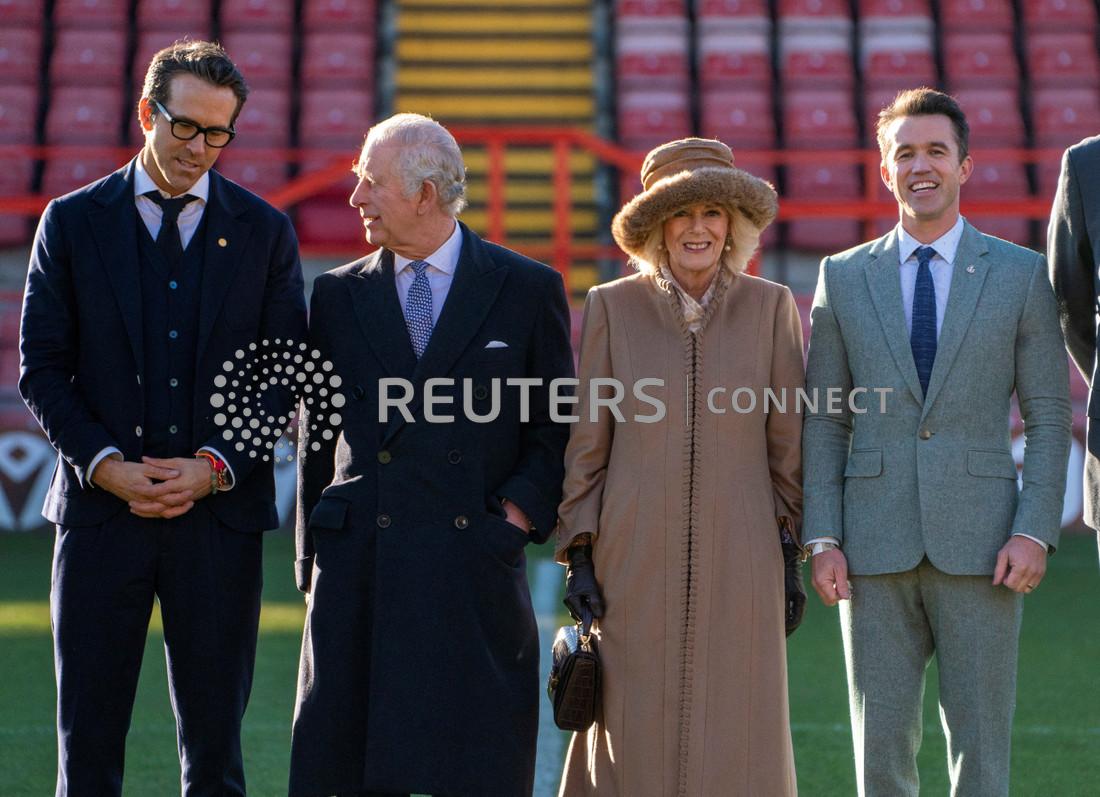
The rain used to define Wrexham. Not just the kind that falls from slate-grey skies over North Wales, but the kind that soaked through decades of industrial decline, economic stagnation, and broken footballing dreams. For generations, the town’s spirit was tied to its club — Wrexham AFC — once proud, then forgotten. Now, something’s changed. The clouds have lifted. It’s finally sunny in Wrexham. And the reason? Two Hollywood stars who bet on a football club no one thought mattered.
Ryan Reynolds and Rob McElhenney didn’t just buy a soccer team. They bought a town’s story — and rewrote it.
From Non-League to Netflix: The Takeover That Shocked Football
In 2021, the football world blinked when news broke: It’s Always Sunny in Philadelphia creators Rob McElhenney and Ryan Reynolds had agreed to buy Wrexham AFC, a club languishing in the National League — England’s fifth tier. To most, it was a joke. To others, it was madness.
But the move was dead serious.
Wrexham, a town of 65,000, hadn’t reached the Football League’s upper levels since the 1970s. Its stadium — Racecourse Ground — is the oldest international stadium still hosting national team matches. Yet its facilities were crumbling. The club was in financial freefall. Fans had grown numb to disappointment.
Enter Hollywood.
The takeover wasn’t just a financial injection. It was a cultural reset. Reynolds and McElhenney didn’t parachute in as distant owners. They embedded. They listened. They showed up — in person, on camera, in pubs. And they made one thing clear: this wasn’t about ego. It was about legacy.
Their first move? Commission a documentary series. Welcome to Wrexham wasn’t just a promotional tool. It became a global phenomenon — a nine-part love letter to underdogs, community, and the absurd power of football.
The Ripple Effect: How Hollywood Changed a Town
You can measure a football revival in goals, wins, and league positions. But in Wrexham, the story runs deeper. The impact spills into the streets.
Before the takeover, matchday attendance averaged around 3,000. Today? Regular crowds exceed 10,000 — with fans flying in from the U.S., Australia, and Europe just to feel the energy. The club sold out season tickets for years in advance. Local businesses report spikes in sales on game days. Cafés, bars, and souvenir shops now brand themselves as “Wrexham Proud.”
But the real shift is psychological.
For decades, Wrexham was defined by loss — factories closed, jobs vanished, young people left. Football mirrored that decline. Now, the narrative has flipped. The town has become a case study in community-led revival, powered by unprecedented global attention.
Reynolds and McElhenney didn’t just bring money. They brought marketing. Reynolds leveraged his social media reach (over 20 million followers) to spotlight the club. McElhenney tapped into storytelling instincts honed over 16 seasons of It’s Always Sunny. Together, they turned a non-league club into a lifestyle brand — selling kits, documentaries, and hope.
The Football Side: More Than Just a PR Win

Critics were quick to ask: Can actors really run a football club?
The answer, so far, is yes — but not alone.
The owners quickly assembled a professional football operations team, including former Premier League execs and experienced scouts. They invested in facilities: new medical centers, upgraded youth academies, pitch improvements. They paid off old debts and restructured the board.
On the pitch, progress was steady. Wrexham won the National League title in 2023, securing promotion to League Two. In 2024, they narrowly missed automatic promotion to League One, falling in the playoff semi-finals. But the trajectory is clear.
Key signings like Paul Mullin — a journeyman striker turned cult hero — became symbols of the new Wrexham. Mullin’s goals, charisma, and authenticity resonated with fans. His story — humble beginnings, relentless work ethic, late-career breakthrough — mirrored the club’s own journey.
The owners also prioritized sustainability. Unlike other celebrity-owned clubs (looking at you, Lionel Messi at Inter Miami), Reynolds and McElhenney are focused on long-term growth, not short-term fame. They’ve resisted the urge to splash cash on flashy imports. Instead, they’re building a squad through smart recruitment, data analysis, and youth development.
Global Attention, Local Roots
One of the biggest risks of Hollywood involvement is alienation. Fans fear being reduced to extras in someone else’s story.
Wrexham’s supporters — known as the Red Wall — were skeptical at first. But the owners earned trust through transparency.
They launched the Wrexham AFC Community Fund, putting millions into local projects. They held regular fan forums. They made decisions publicly — even the tough ones, like stadium redevelopment plans that displaced longtime vendors.
And they stayed consistent in their messaging: “This club belongs to the people of Wrexham.”
That philosophy extended to the documentary. Welcome to Wrexham didn’t just follow the owners. It spotlighted locals — a pub owner, a disabled fan, a youth coach, a ticket office worker. The show humanized the town, making viewers around the world care about a place they’d never heard of.
The result? A global fanbase that feels personal, not performative.
What Other Clubs Can Learn
The Wrexham model isn’t easily replicable. Not every town has Hollywood investors. But there are transferable lessons:
- Authentic storytelling matters. Fans don’t want polished PR. They want truth, emotion, and connection.
- Community is the real asset. Football isn’t just a sport — it’s social infrastructure. Invest in people, not just players.
- Long-term vision beats short-term hype. Reynolds and McElhenney aren’t chasing headlines. They’re building a sustainable club.
- Embrace digital. The documentary, social media campaigns, and direct-to-consumer merch have turned Wrexham into a digital-first brand.
- Let fans lead. The Red Wall wasn’t replaced — it was amplified. Their voice shaped the club’s identity.
Clubs like Forest Green Rovers and Leyton Orient have explored similar paths. But Wrexham’s combination of storytelling, access, and emotional authenticity remains unmatched.
The Challenges Ahead
Sunshine doesn’t mean smooth sailing.
As Wrexham climbs the football pyramid, pressure mounts. Expectations rise. The gap between League One and the Championship is financial as much as competitive. Can a club with Hollywood backing sustain growth without becoming a vanity project?
Off the pitch, there are tensions. Some locals worry about gentrification. Rising tourism and global branding could price out working-class fans. Stadium expansion plans have sparked debate about preserving heritage versus chasing modernity.
And then there’s the distraction of fame. Reynolds and McElhenney are busy — film shoots, awards shows, business ventures. Can they stay committed when the spotlight fades?
The owners have acknowledged these risks. In interviews, they’ve stressed their 50-year vision. They’ve hired local leaders to handle day-to-day operations. They’ve set up governance structures to protect the club’s soul.
But the real test will come when the next drought hits — when the wins stop, the cameras leave, and the town is left with just football again.
A New Kind of Football Dream
Wrexham’s revival isn’t about winning trophies — not yet, anyway. It’s about proving that football can still mean something beyond money and fame.
It’s about a town rediscovering pride. It’s about fans believing again. It’s about two actors who looked at a dying club and saw a story worth telling.
The sun didn’t just appear in Wrexham by chance. It was earned — through investment, empathy, and a stubborn belief that even the smallest clubs can inspire the world.
Other towns have football teams. Wrexham has a movement.
And if you ever find yourself in North Wales on a matchday, standing in the stands at Racecourse Ground, feeling the roar of 10,000 voices, you’ll understand: the sun isn’t just out. It’s here to stay.
FAQ
Q: Who owns Wrexham AFC now? A: Wrexham AFC is co-owned by Hollywood actors Ryan Reynolds and Rob McElhenney, who led a consortium to purchase the club in 2021.
Q: Did Wrexham get promoted? A: Yes. Wrexham won the National League in 2023, earning promotion to EFL League Two. They are aiming for further promotion to League One.
Q: Is the Wrexham documentary real? A: Yes. Welcome to Wrexham is a documentary series produced by FX and Disney+, chronicling the club’s journey under its new ownership. Two seasons have been released, with a third confirmed.
Q: Can fans visit the Racecourse Ground? A: Absolutely. The stadium offers regular tours, and matchday tickets are available — though they often sell out quickly due to high demand.
Q: How has Wrexham changed since the takeover? A: The club has seen massive growth in global fans, revenue, and infrastructure. The town has experienced economic uplift, and community engagement has surged.
Q: Are Reynolds and McElhenney involved in daily operations? A: While they set the strategic vision, day-to-day football operations are managed by a professional team. The owners remain highly visible and involved in key decisions.
Q: Is Wrexham AFC profitable? A: The club has significantly increased revenue through merchandising, media rights, and global fan engagement. While exact financials aren’t public, the club is on a sustainable growth path.
FAQ
What should you look for in It’s Finally Sunny in Wrexham: Hollywood’s Bold Gamble on a Welsh Club? Focus on relevance, practical value, and how well the solution matches real user intent.
Is It’s Finally Sunny in Wrexham: Hollywood’s Bold Gamble on a Welsh Club suitable for beginners? That depends on the workflow, but a clear step-by-step approach usually makes it easier to start.
How do you compare options around
It’s Finally Sunny in Wrexham: Hollywood’s Bold Gamble on a Welsh Club? Compare features, trust signals, limitations, pricing, and ease of implementation.
What mistakes should you avoid? Avoid generic choices, weak validation, and decisions based only on marketing claims.
What is the next best step? Shortlist the most relevant options, validate them quickly, and refine from real-world results.